
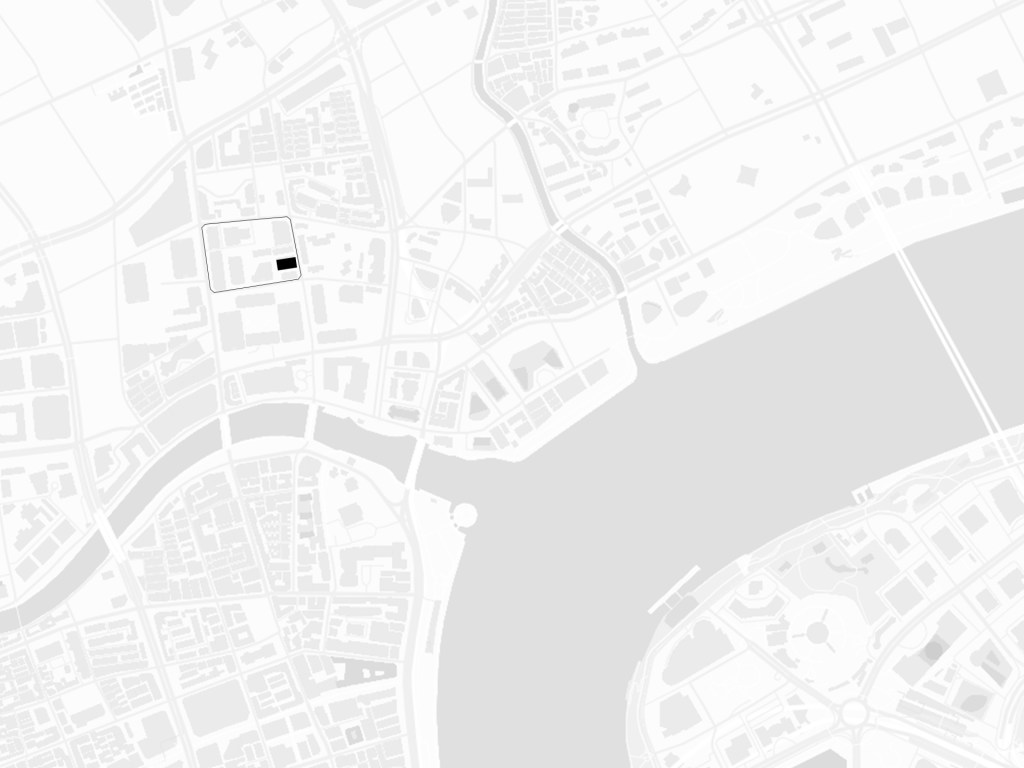
Location: Hongkou District, Shanghai, China
Client: Shanghai Hongfang (Group) Co., LTD
Type: Architectural & Interior & Landscape
Program: Apartment
Size: 3800sqm
Completion: 2024
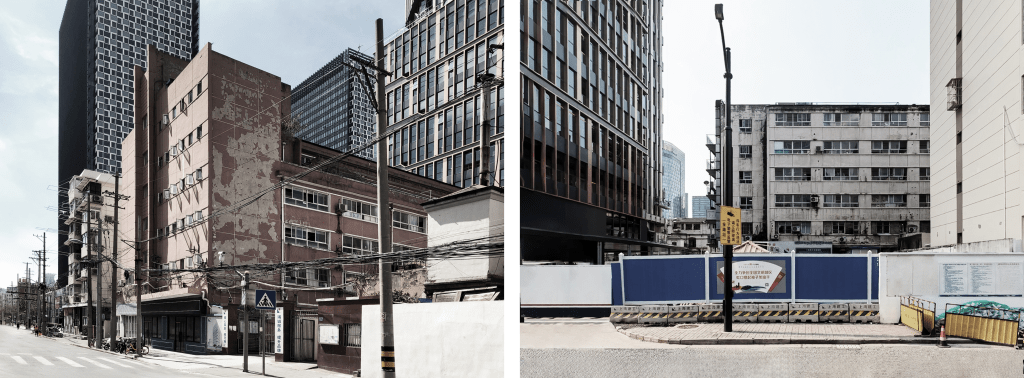
The original No. 173 Zhapu was built in 1991 and was formerly the No. 1 Primary School of Haining Road. After the school moved, it was vacant for several years, presenting an image that was inconsistent with the appearance of the central city. Therefore, in the overall renovation of the No. 11 Sichuan North Road block, the renovation of the function and appearance of the building became an important part of the entire block renewal.
原乍浦173号,建造于1991年,前身为海宁路第一小学。在小学搬迁之后,此楼空置数年,呈现出与中心城区面貌不符的陈旧感。所以在本次对于四川北路街道11街坊的整体改造更新中,此建筑的功能更新和面貌重塑成为了整个街区更新的重要一环。

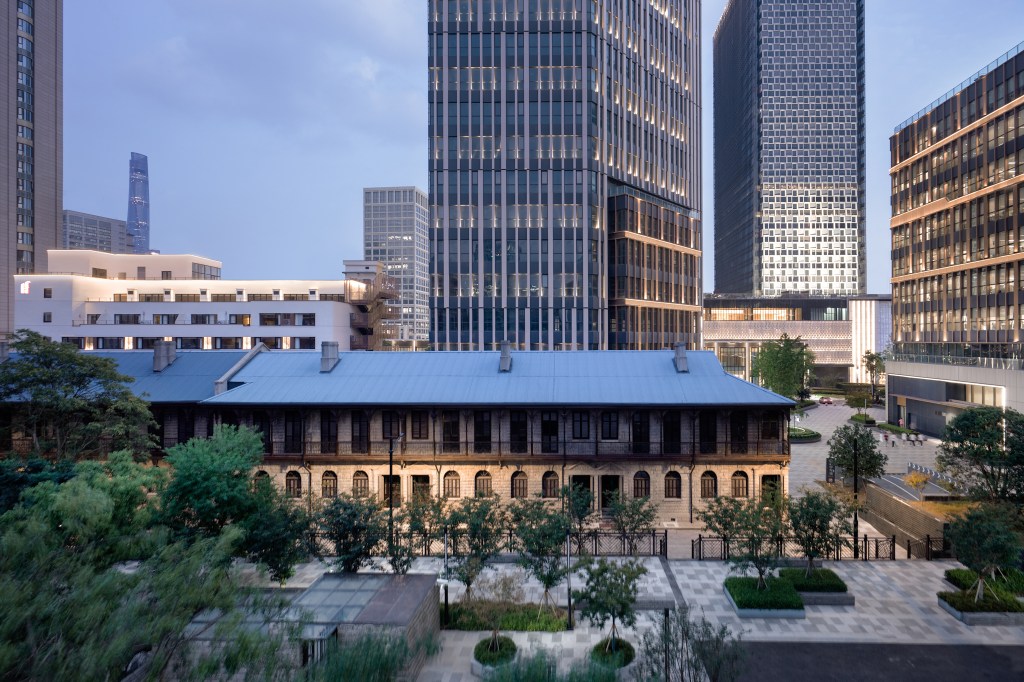
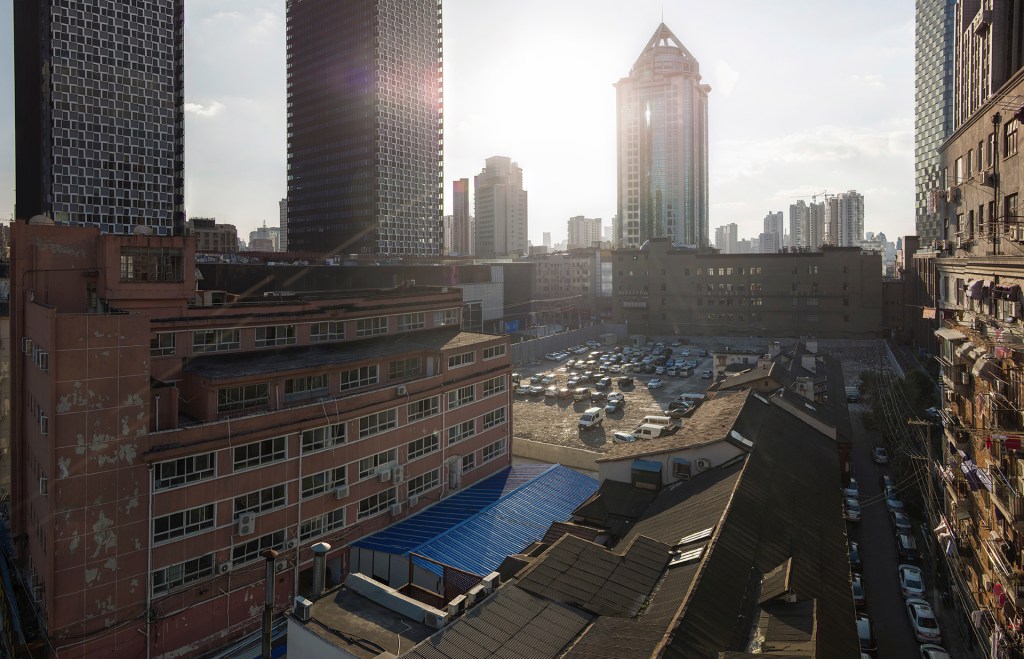
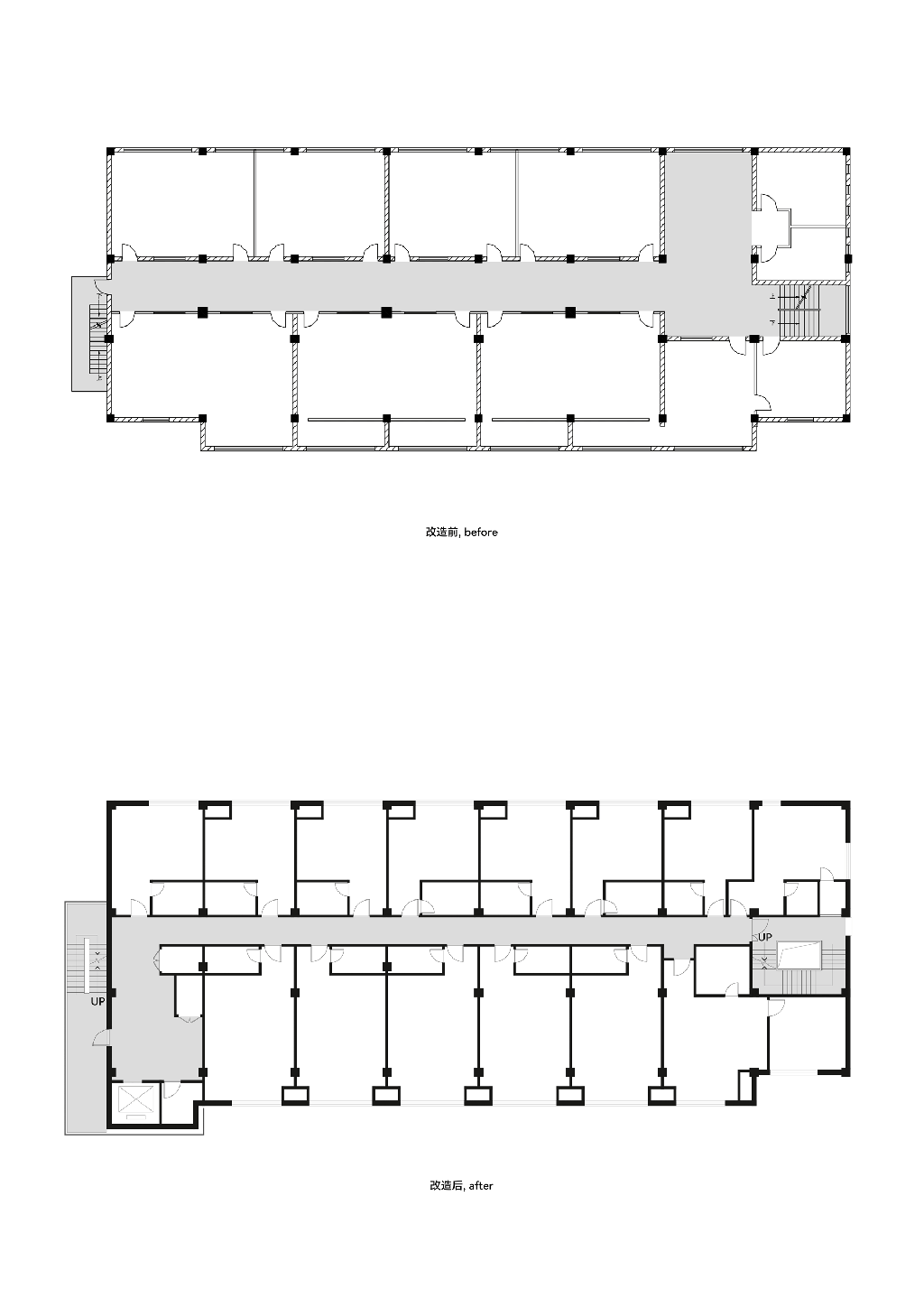
The original building has 6 floors (partially 5 floors), about 3,800 sqm, and a regular floor plan. However, as an early-constructed building, the small structural span and lower floor height also became a major difficulty in the design. Its simple, repetitive and sequential architectural shape presents a pure beauty similar to the Bauhaus style, which attracted us to emphasize and highlight this modern sense in the renovation.
原建筑共6层(局部5层),总建面约3800㎡。平面规整,但作为早期的学校建筑,结构跨度较小,层高较低成为此建筑改造的一大难点。但其简洁,重复而有序列感的建筑造型,又呈现出包豪斯风格一般的纯粹的美感,吸引着我们在改造中去强调和突出这种现代感。
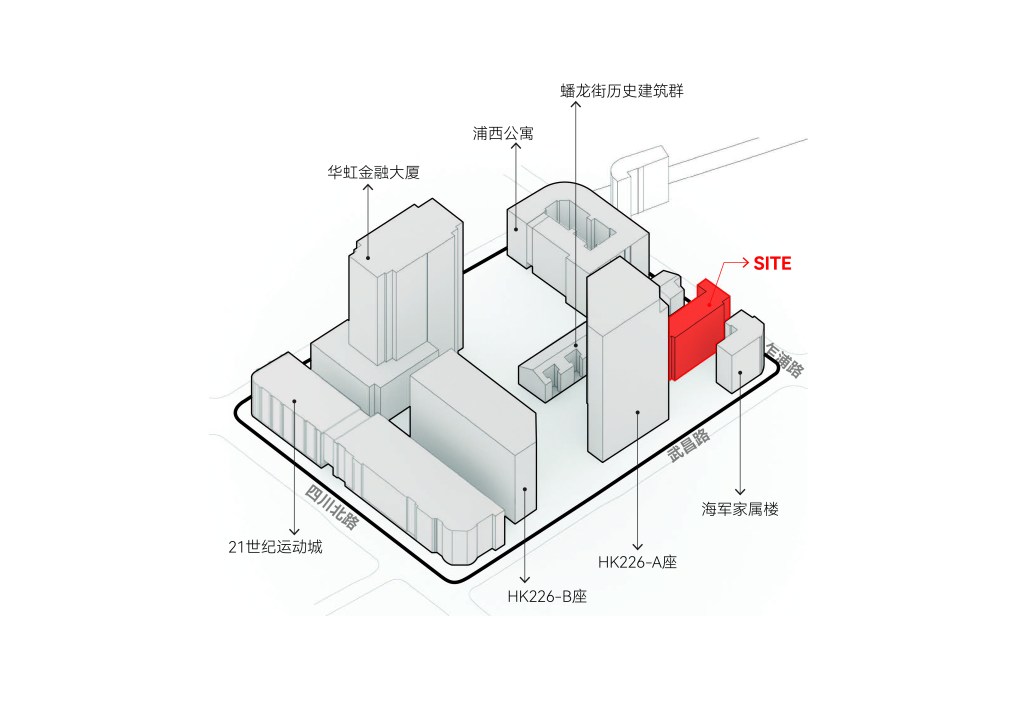
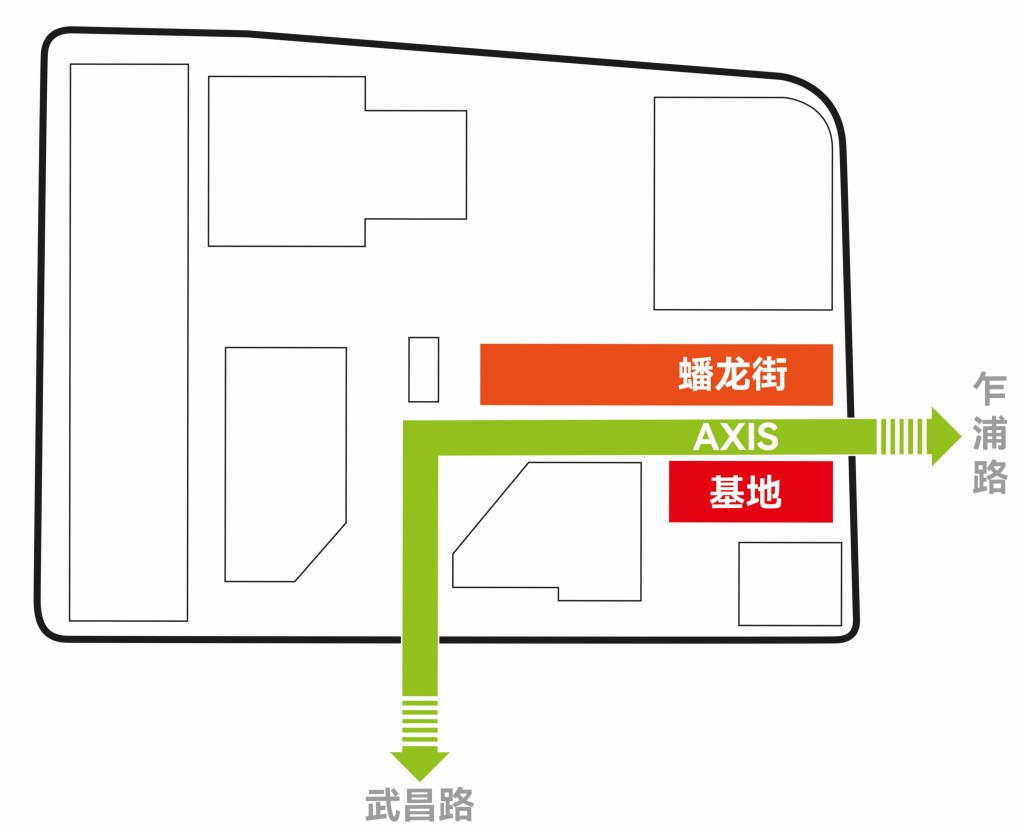
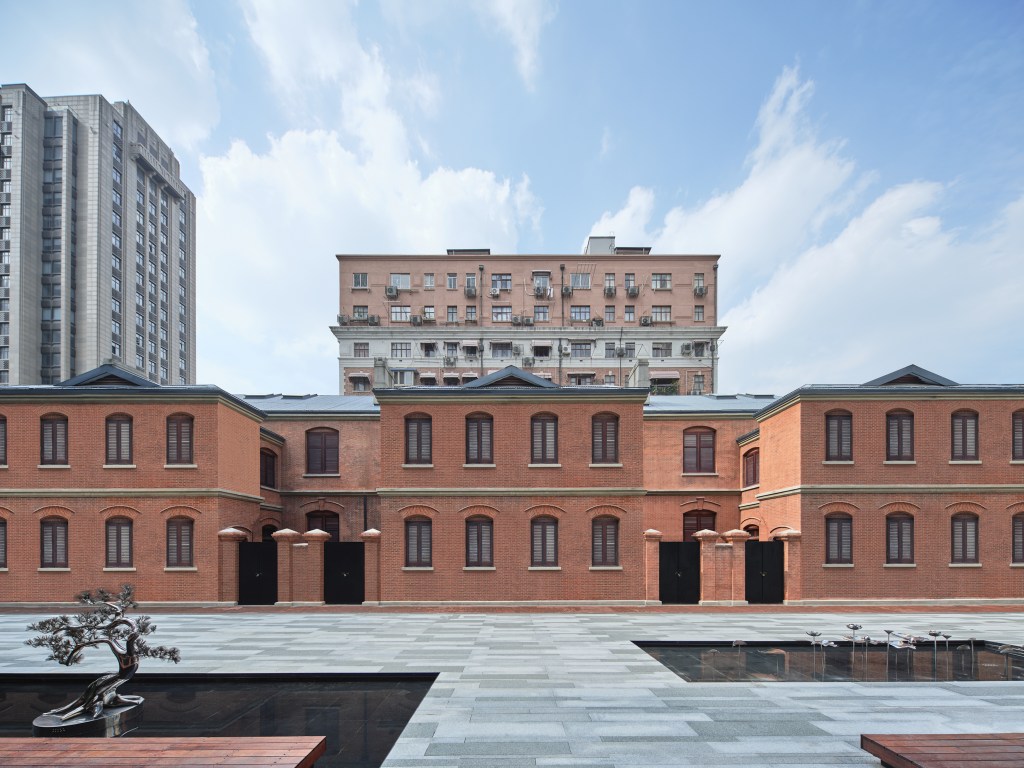
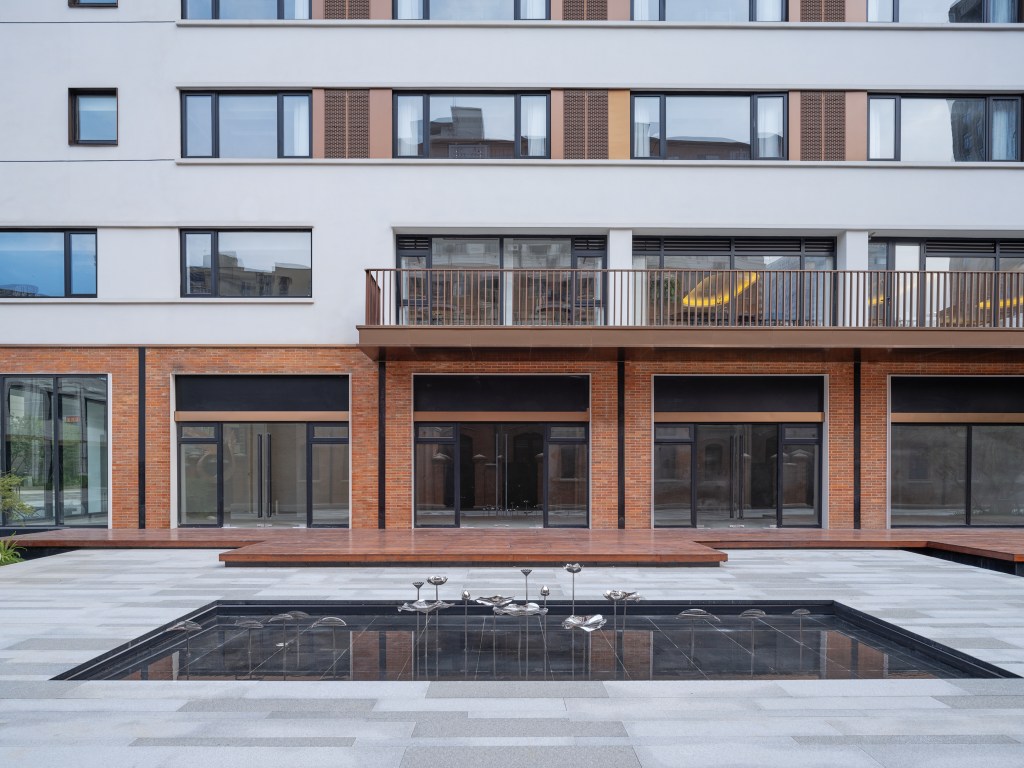
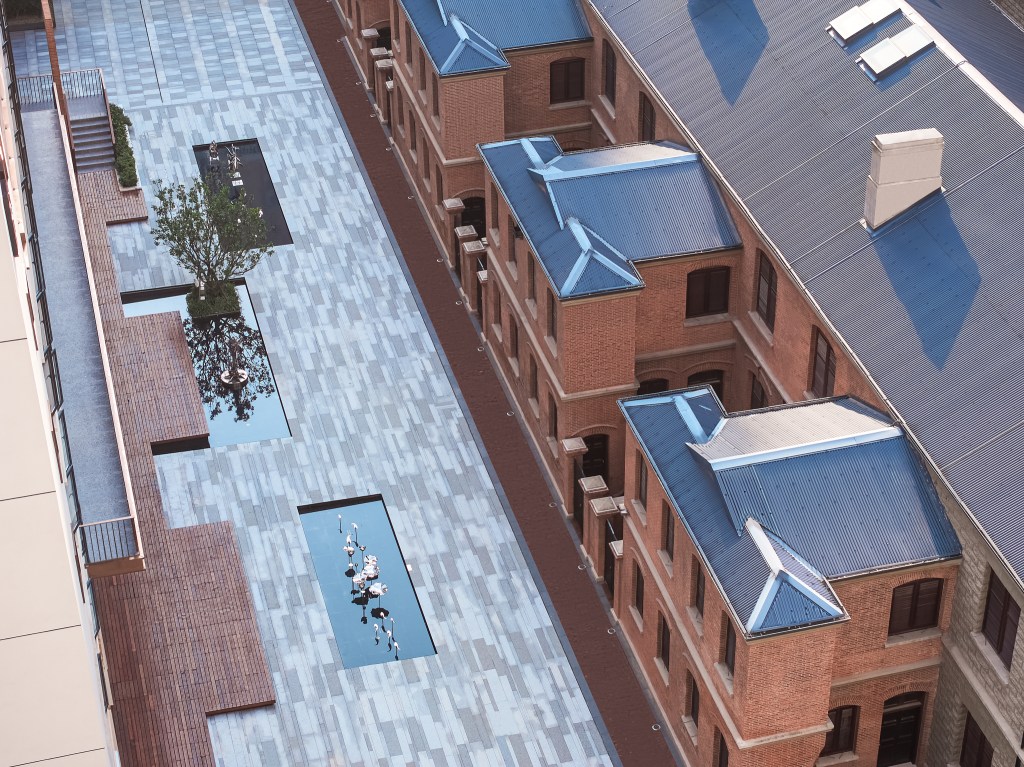
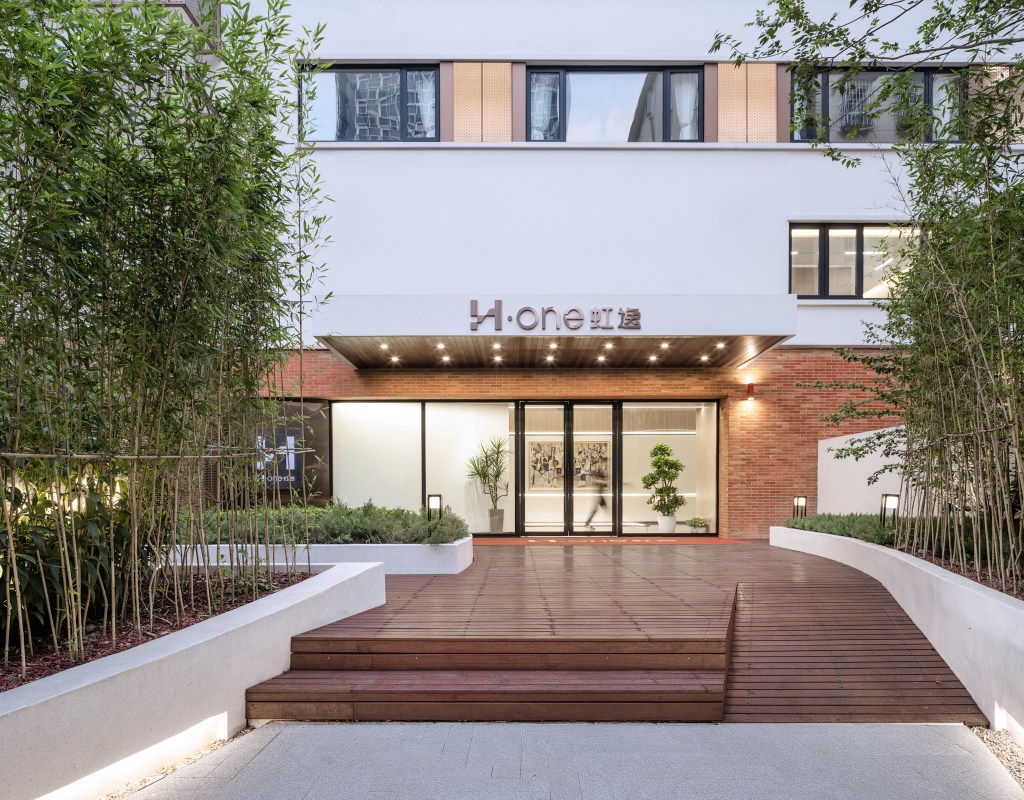
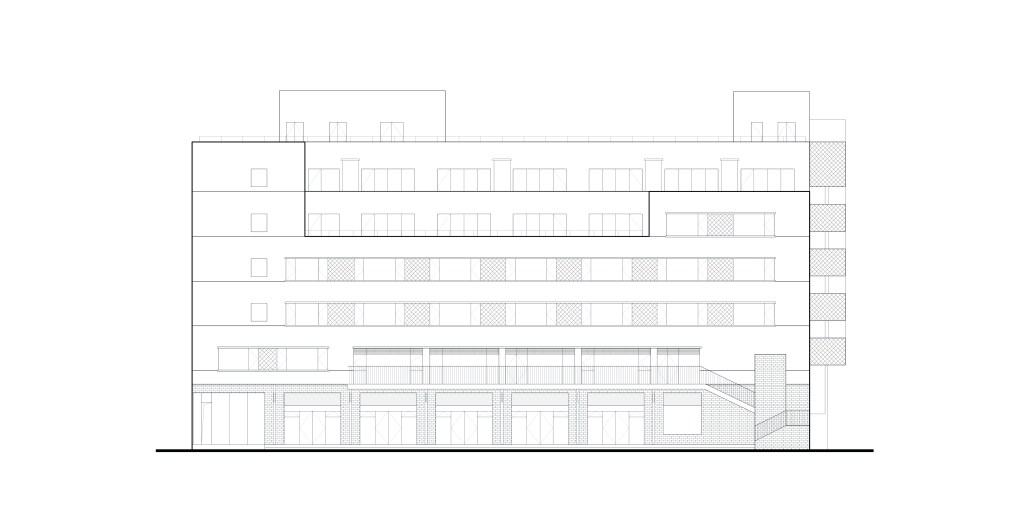
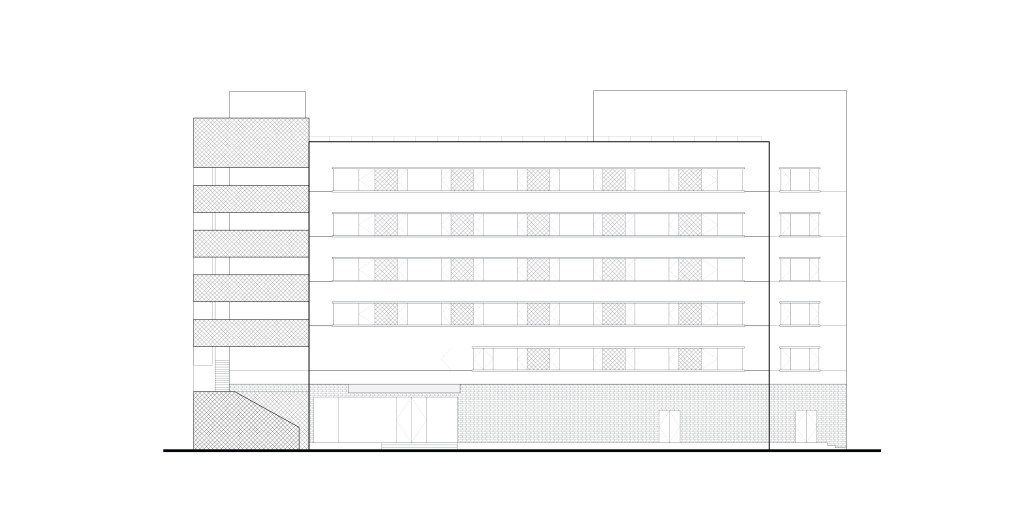
Considering the original red brick facade of the historic building No. 1-13 Panlong Street, the same brick wall was used on the first floor of the building to echo it. Combined with the color of the surrounding buildings, the other are painted warm white.
外立面改造中,考虑到周边历史建筑蟠龙街1-13号原本红砖立面,为与其呼应,建筑首层也采用了同色的砖墙。二层以上区域结合周边新旧建筑的色彩分析,采用米色涂料。
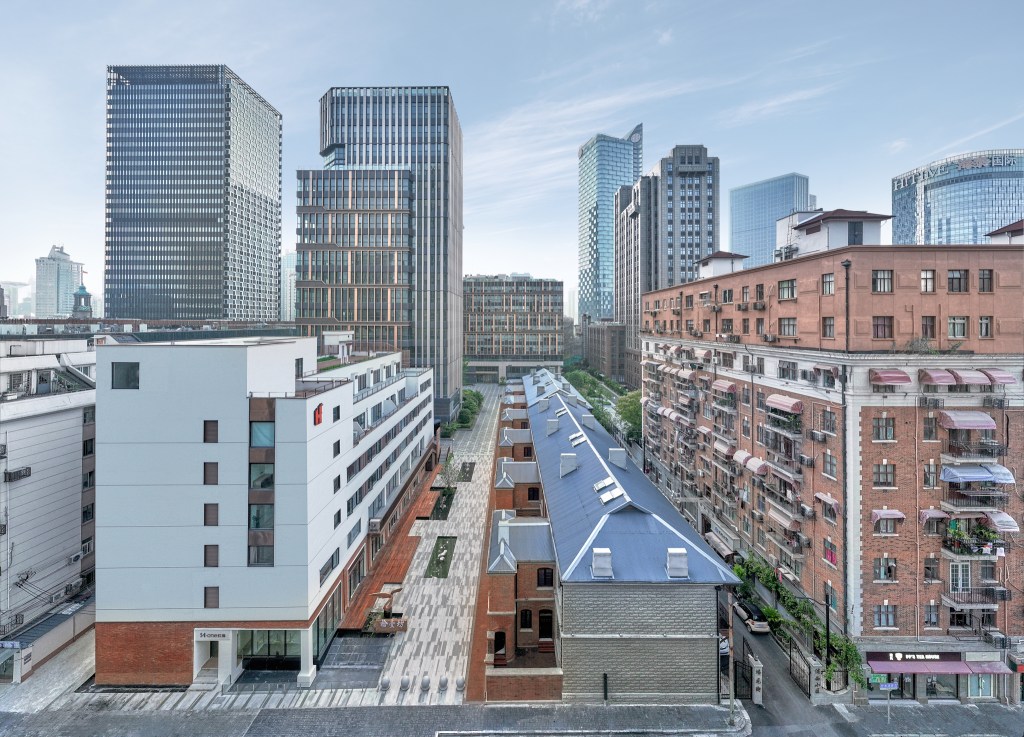
The original array of facade windows was retained, and a full-length windowsill was made for it, visually creating a horizontal long window effect on each floor. We also transformed the wall between windows into a platform for the AC external unit and decorated it with bronze perforated panels. Therefore, a new sense of sequence was formed in the facade, further emphasizing the horizontal pattern.
原本重复的立面外窗被保留下来,但在每一层做了通长的窗沿,视觉上形成了每层横向长窗的感觉。又将长窗窗间墙部分改造成空调外机平台,并用古铜色穿孔板装饰,在长窗中又形成了新的序列感,丰富了立面模式语言。
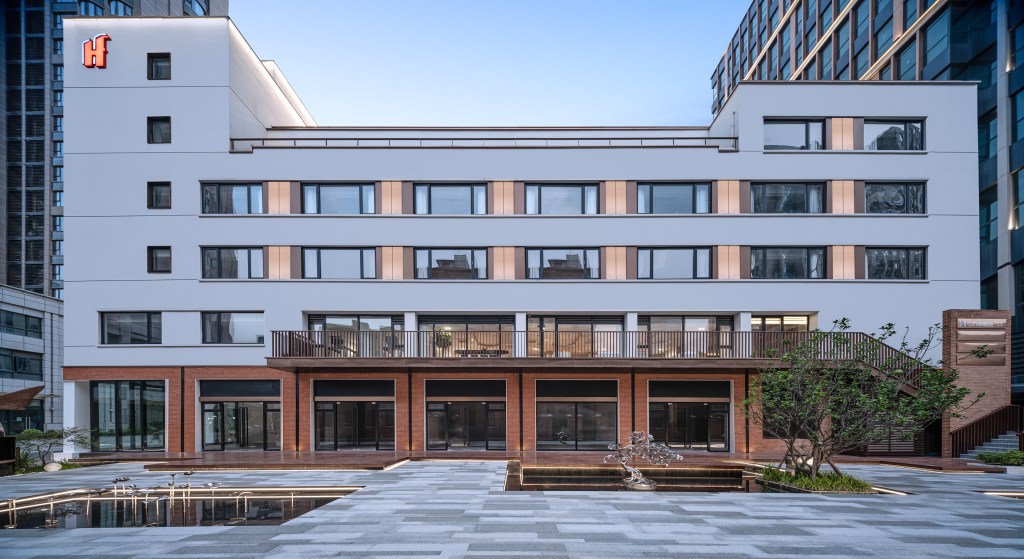
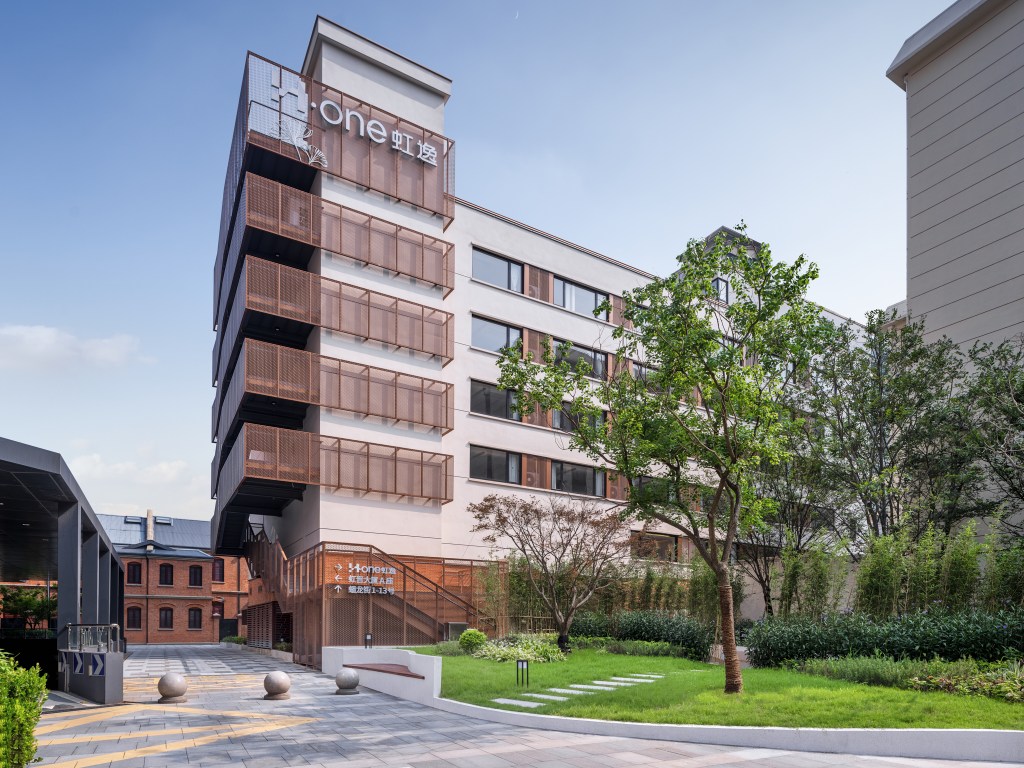
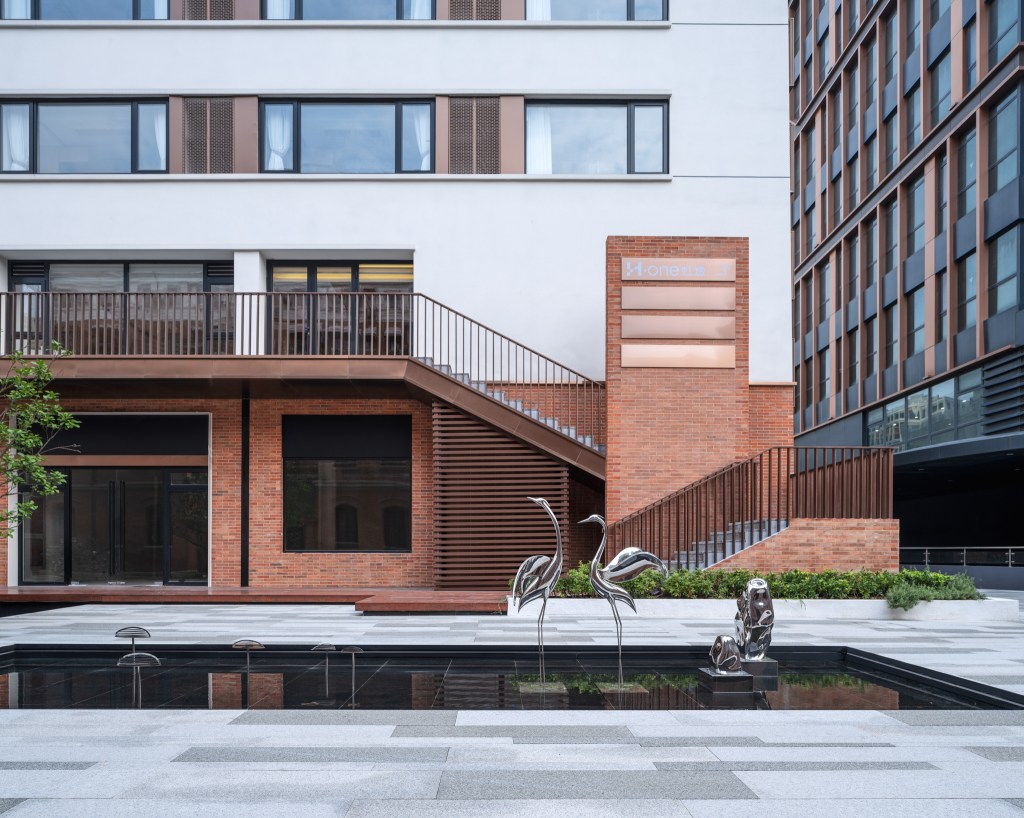
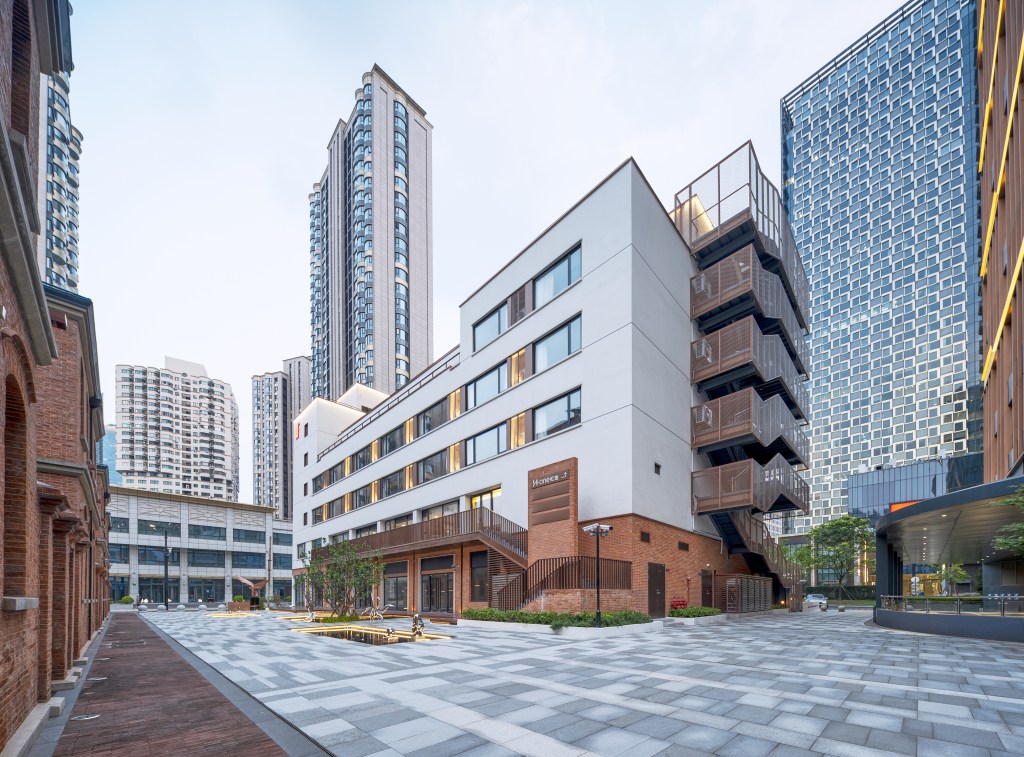
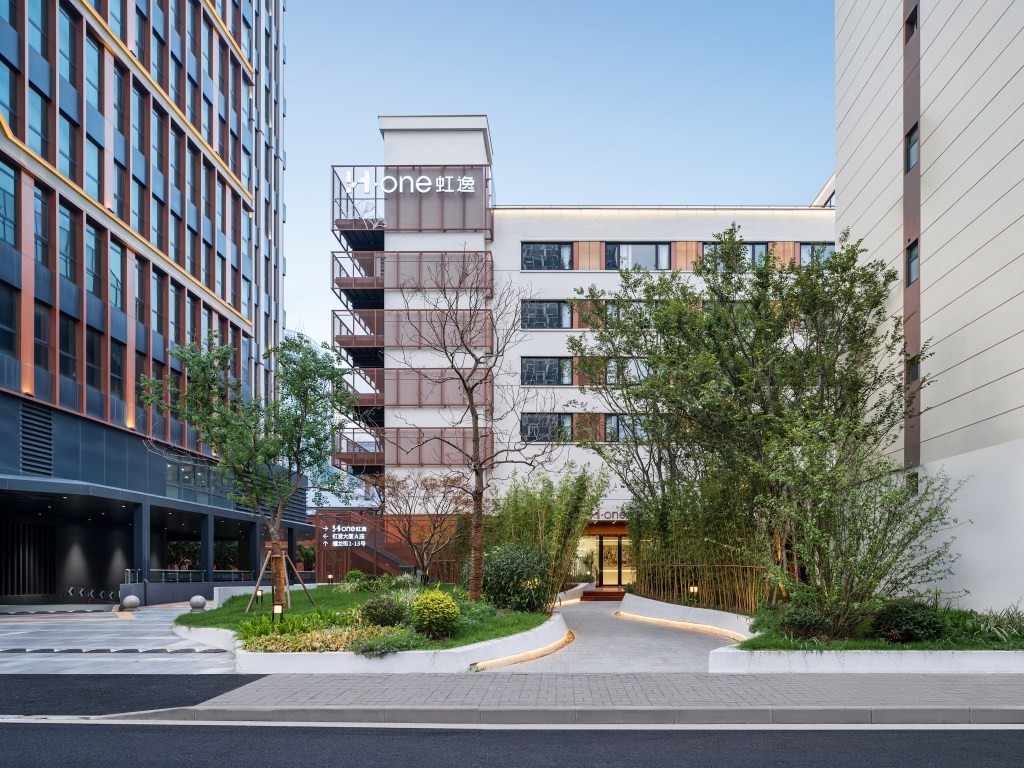
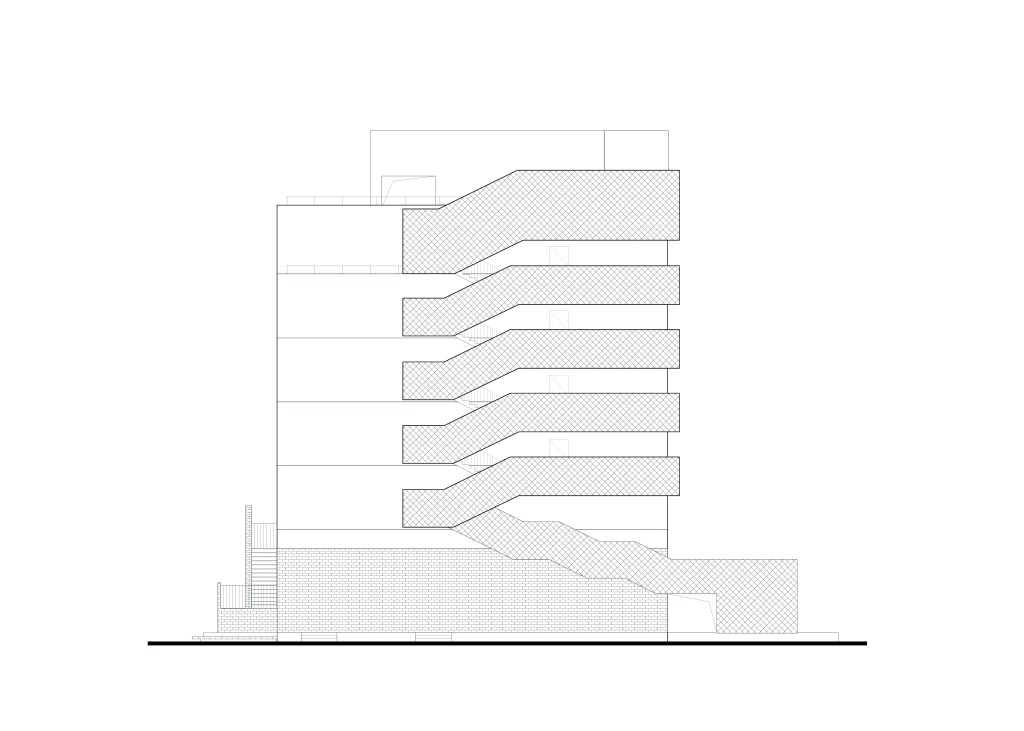
In consideration of users’ needs, an elevator was added to the west side of the building. The bronze perforated plate and the original steel staircase were unified to form a symbolic form facing the south square.
建筑西侧结合实际使用需求,增加了电梯,并以古铜色穿孔板与原有钢楼梯统一在一起,形成面向南侧广场具有识别度的建筑标识。
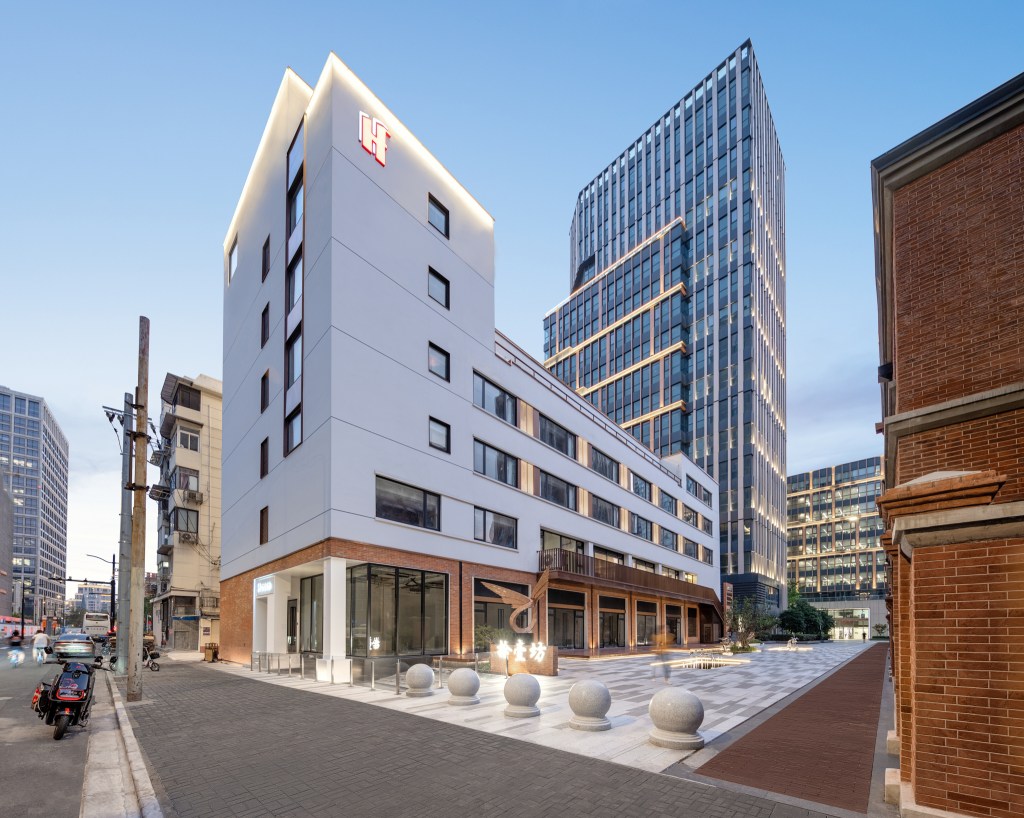
In order to improve the sense of entrance to the square between Panlong Street, the original solid wall corner on the east side was retracted and replaced with floor-to-ceiling glass, and a shallow pool flowed out in front, making it easier for pedestrians on Zhapu Road to see the scenery in the square, thereby improving the permeability of the building square and the city streets.
东侧乍浦路街角,为改善与蟠龙街之间的广场的进入感,将原有的实墙街角内收并改为落地玻璃,前方流出了一片浅水池,使得行人在乍浦路上更容易看见广场内部的景象,提升建筑广场与城市街道的渗透性。
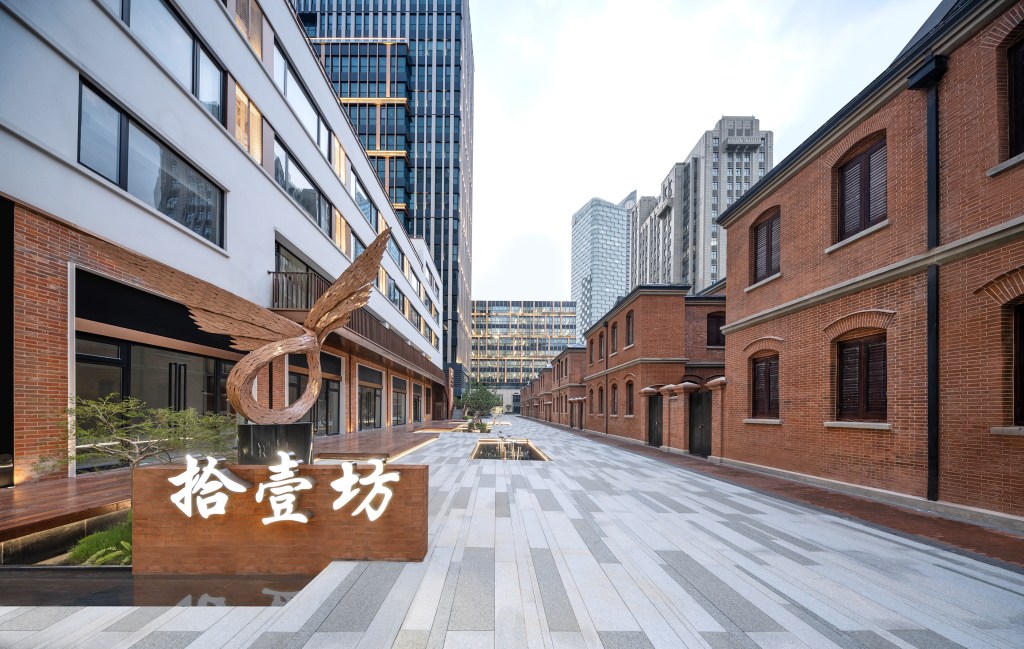
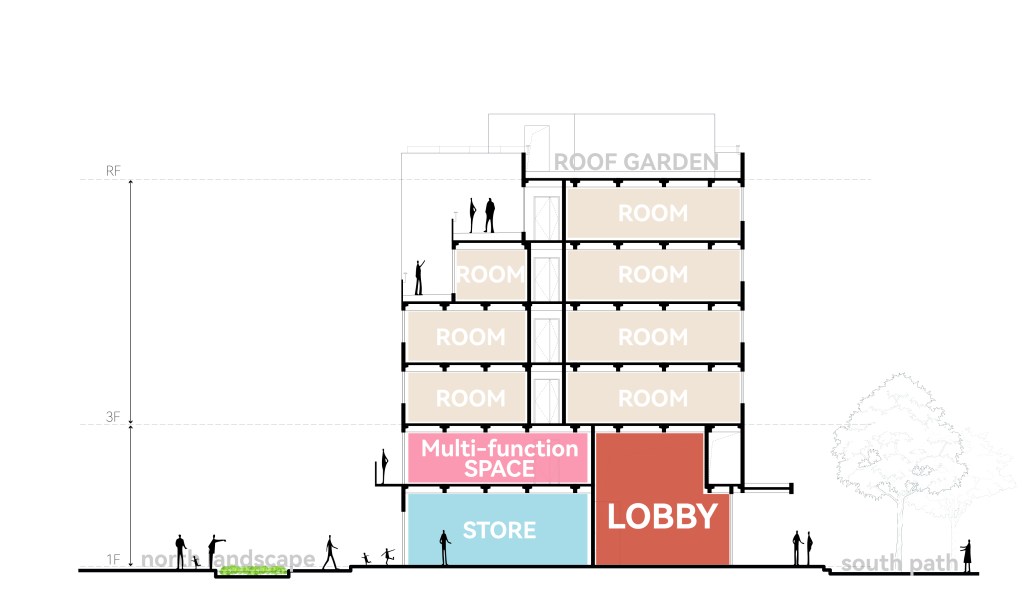
Together with the old buildings on Panlong Street, a small square is enclosed on the north side. Commercial shops are set up on the first floor, and the wooden platform is extended outward to limit the scope of the outdoor space. In this way, the square space is used for commercial services, while at the same time it is also constrained to ensure its necessary passability. A balcony is added on the second floor to enrich the diversity of indoor and outdoor exchanges.
北侧与蟠龙街老建筑一起,围合出一处小的广场,一层设置商业店铺,并将木平台向外延伸,限定出外摆空间的范围,即利用了广场空间为商业服务,同时也有所约束,保证其必要的通过性。二层增设阳台,丰富室内外交流的多样性。
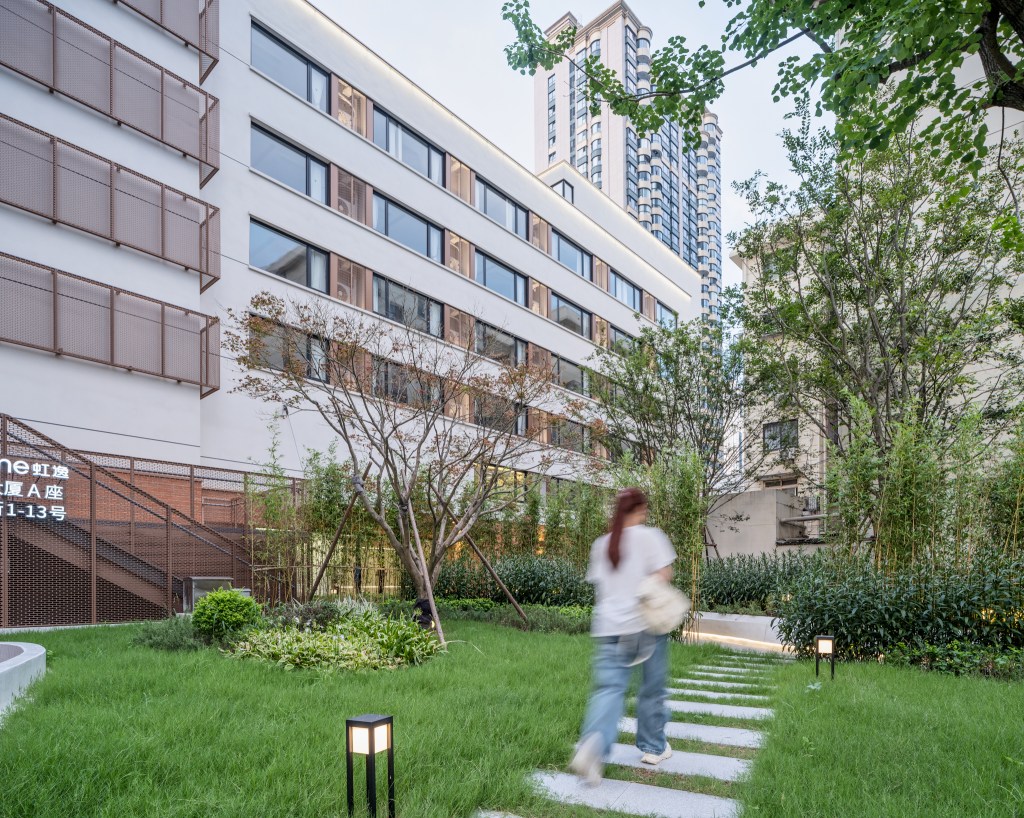
Bamboo, grass, trees and shrubs form a natural background barrier, separating the quiet apartment entrance from the noisy street, enhancing the peaceful and warm home experience. Light, shadow, bamboo and stone interact with each other in the south space. Along the zigzag path, residents enter the apartment guided by warm lights.
竹林、地被与乔灌木形成天然的背景屏障,其中通过一条蜿蜒的小径引导至建筑入口。对静谧的公寓入口与嘈杂的周边环境进行了隔离,强化幽静与温馨的归家的仪式感。光、影、竹、石在南侧室外空间中碰撞重叠。沿着曲折的小径,住客在暖色调灯光引导下进入公寓。
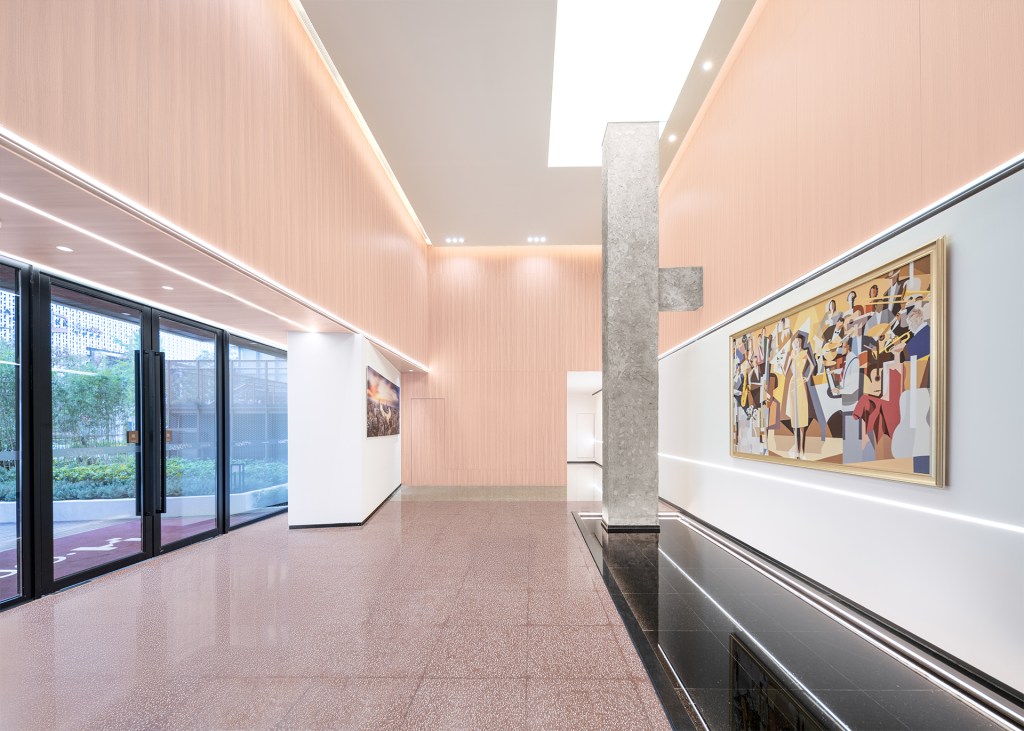
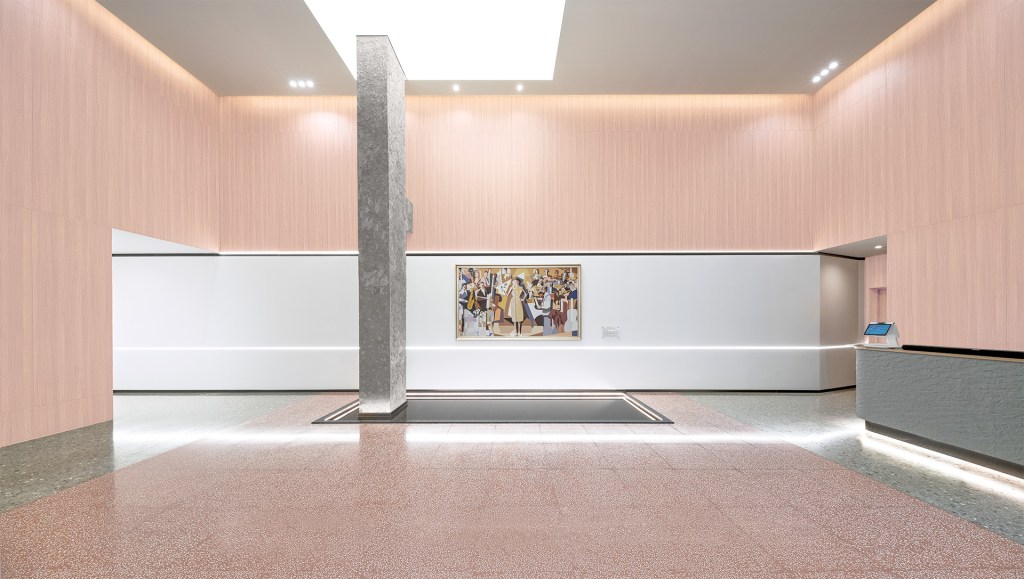
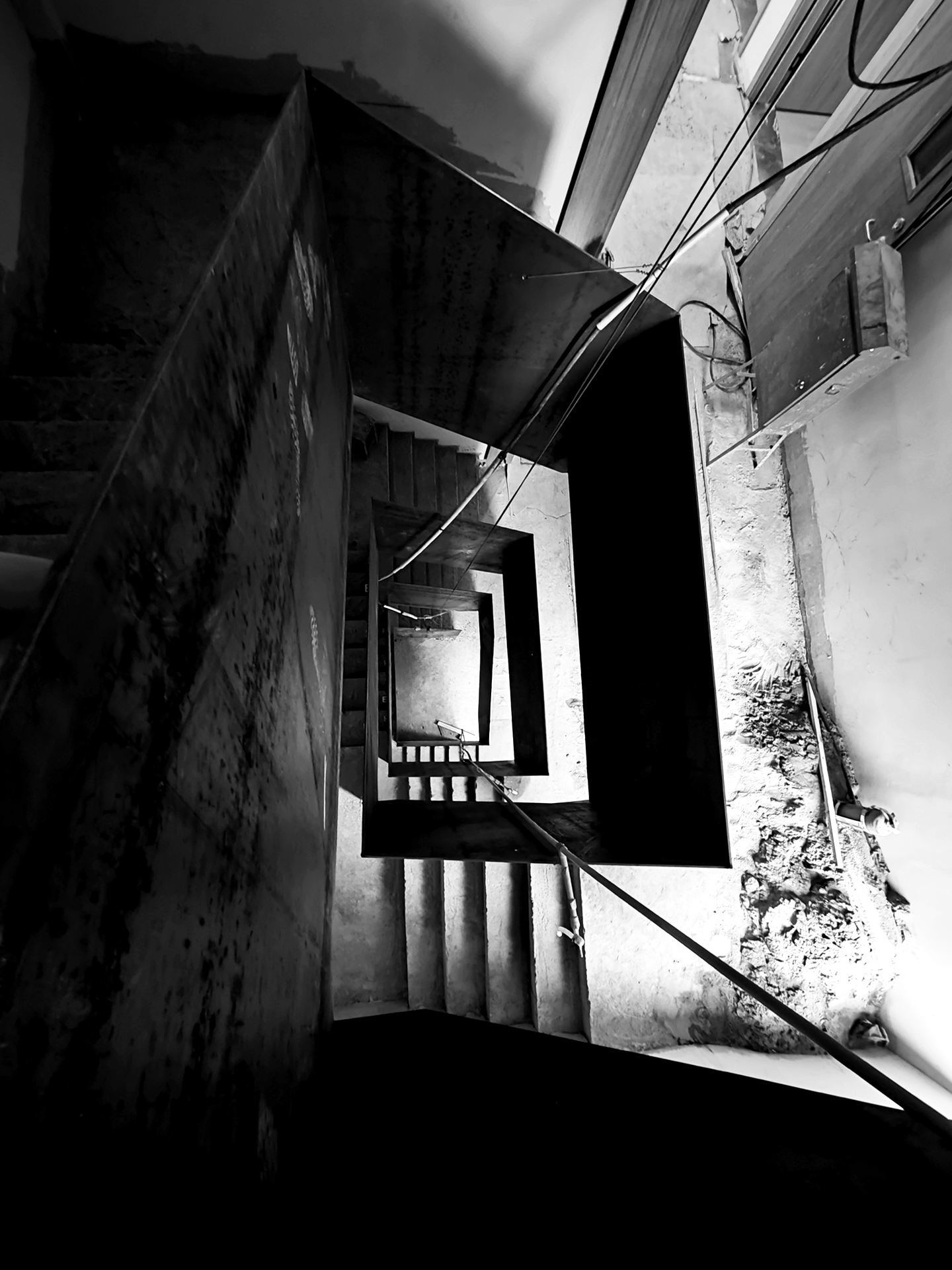
The lobby design creates a warm feeling of the apartment through delicate wood grain. Due to the limitation of structural transformation, the original column appeared in the lobby space. The design retains the original rough concrete texture of the column, which forms a clear contrast with the entire exquisite lobby, and also implies that this building is a work of transformation.
大堂设计上通过细致的木纹营造出公寓的温馨感。但由于结构改造上的限制,原有的柱子突出在了大堂的空间中。设计通过将这颗柱子原本粗糙的混凝土质感保留以后,形成了与整个大堂精致的对比,也暗示出本建筑是经改造而成。
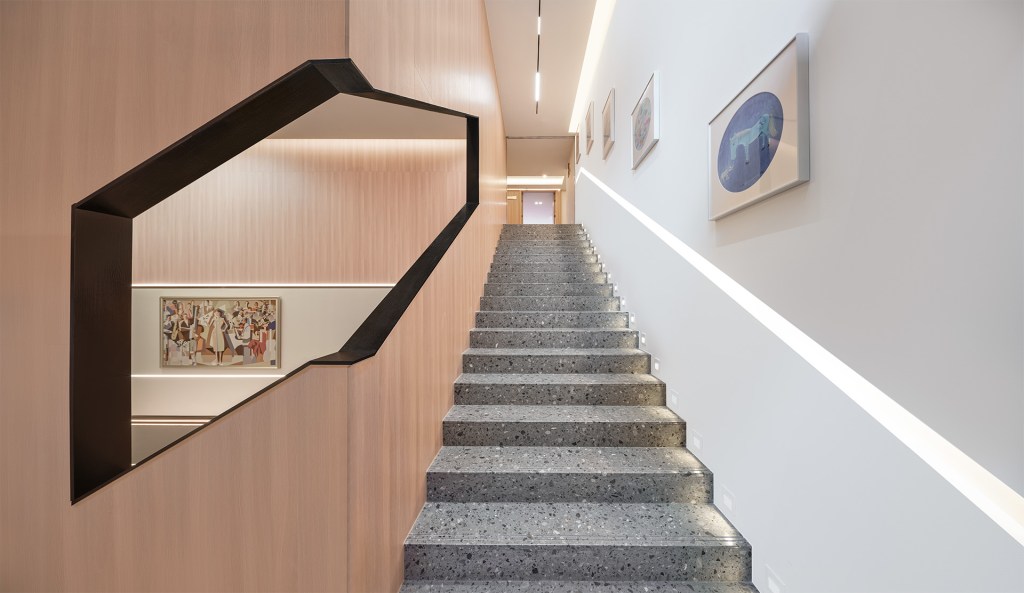
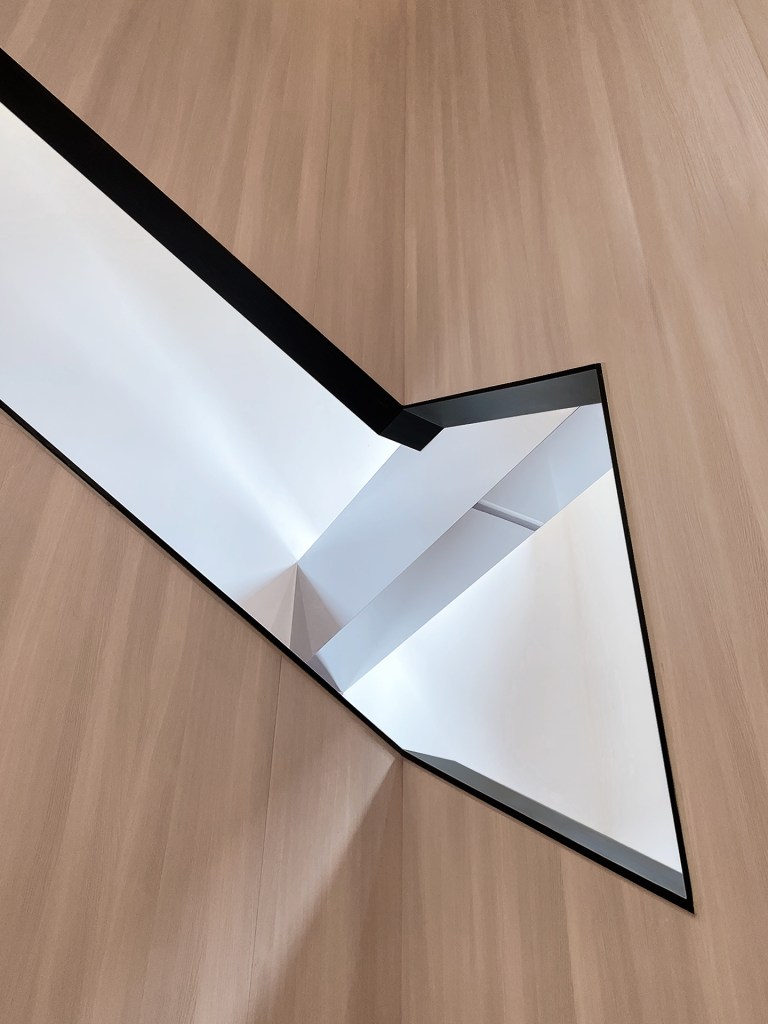
The pure white back-shaped metal handrails and wood tiles create the melody of the spiral staircase.
纯白的“回字型”金属板扶手与木纹地砖形成环绕的主旋律。

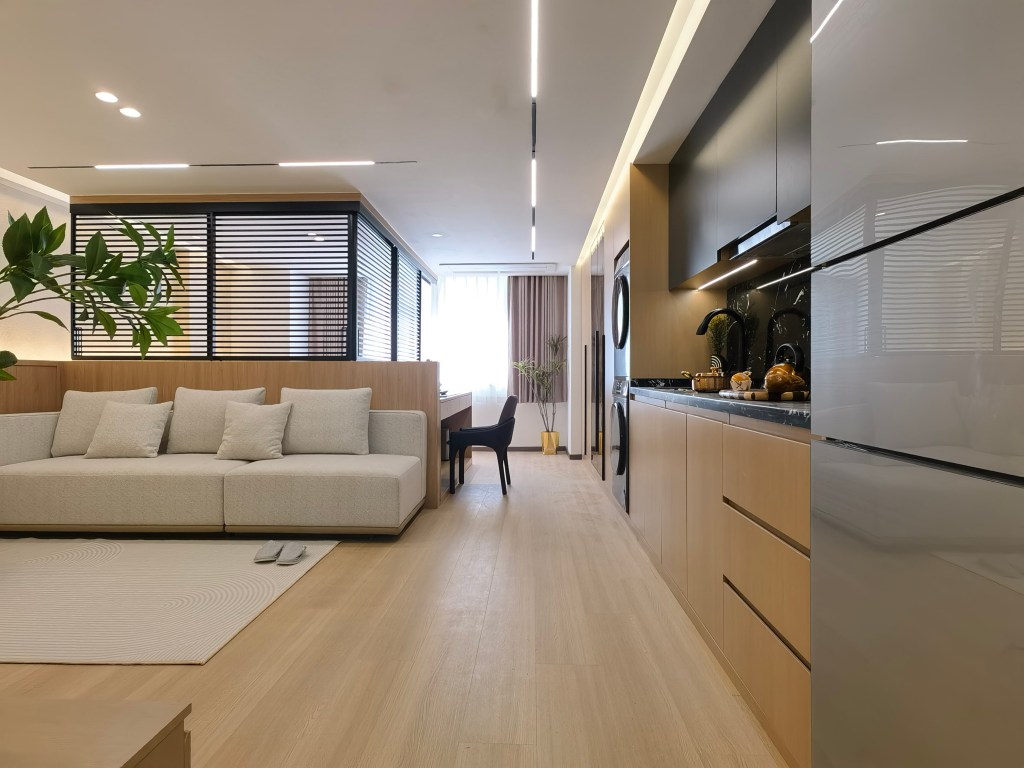
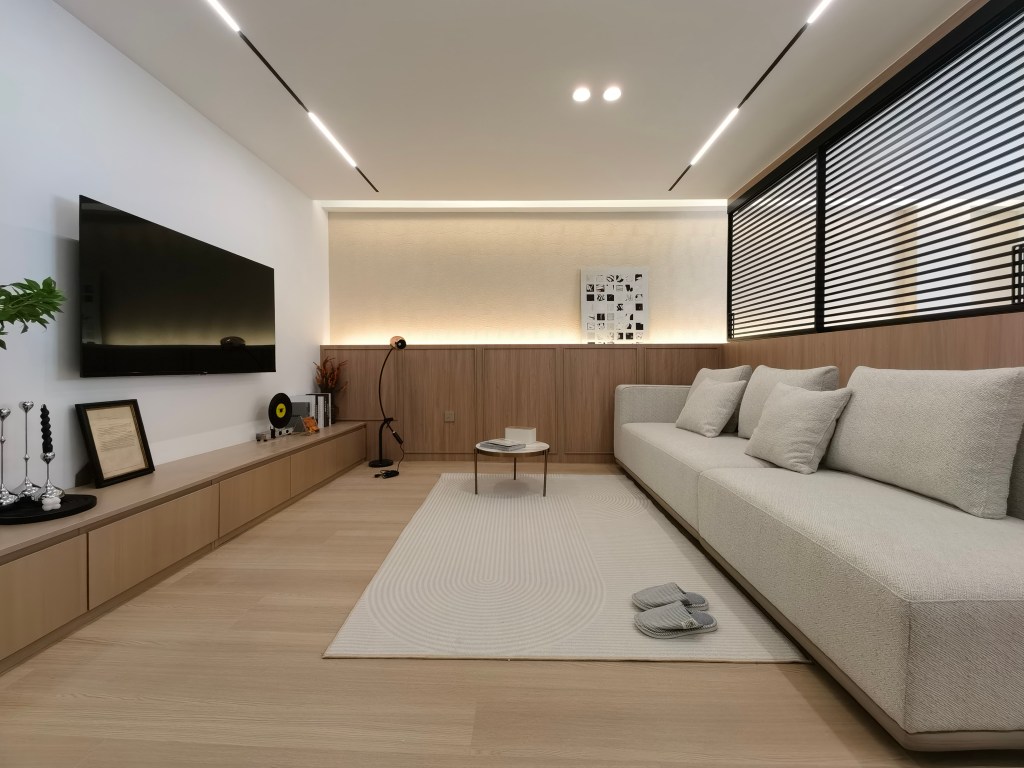
When designing the interior of the room, the original building’s 5.2m structural frame and the 2.3m net height were the difficulties in renovating it into a living space. Because each frame would be too large as one unit, and too small as two units. If partition walls were added, the space would become even more depressing.
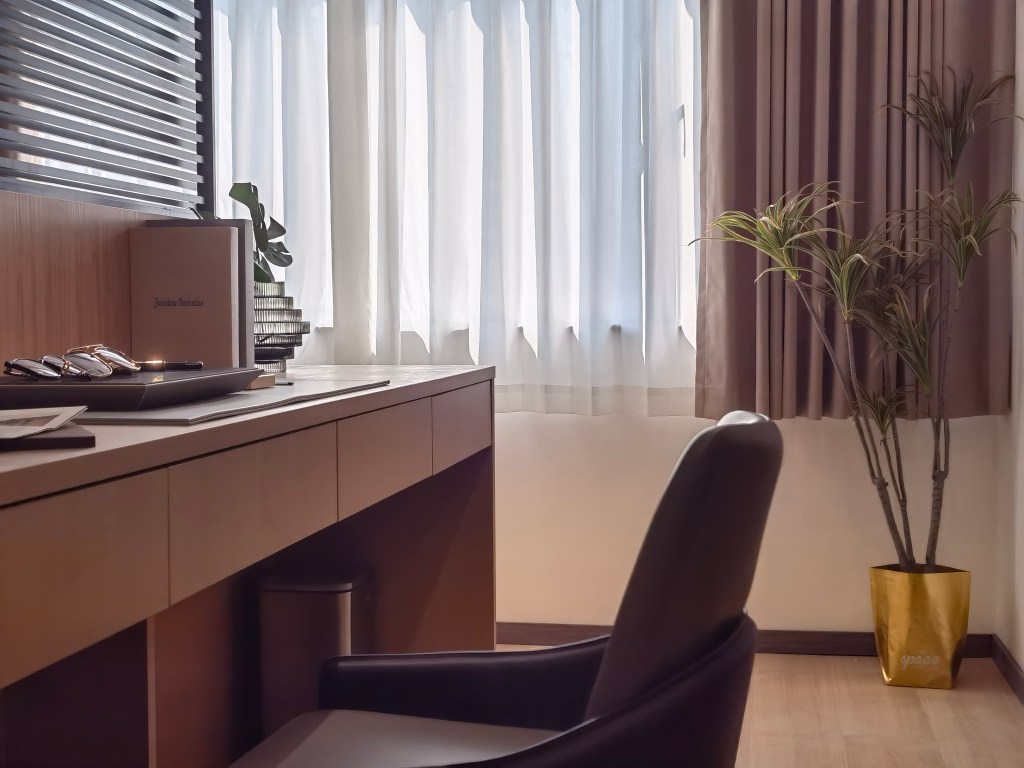
Ultimately, through soft partitions, such as half-height partitions and curtains, the space is divided and connected in another way. Without internal walls, the sunlight can be easier into the room, which enhances the brightness and avoids spatial depression.
设计户型时,原本建筑5.2米的结构开间和2.3m梁下高度成为改造成居住空间的难点。常规单开间太大,双开间又太小。隔墙的加入又会使得空间低矮的同时更显压抑。
最终通过半高隔断,布帘等软性分隔,将空间以功能区划分出来,但又相互联系。没有内部的墙体,也使得外窗的阳光更好地引入室内,为层高不足的室内空间提升明亮感,避免压抑。
Drawings

 hitoshi-drl.com